
Common Indian Spices List with Uses & Benefits
 Masala House Editorial Team
 - 2026-05-04
You have probably already used turmeric, cumin, or red chili powder in everyday cooking. But knowing what each spice actually does — for flavor, aroma, and wellness — can completely change how you cook and eat. Indian spices are not just about heat or color. Each one has a specific role, and understanding that role is what separates flat cooking from food that actually tastes like something.
At a Glance
- Indian spices are plant-derived — seeds, bark, roots, dried fruits
- Whole spices stay fresh far longer than ground
- Tempering in hot oil unlocks the real aroma of most spices
- Many spices actively support digestion
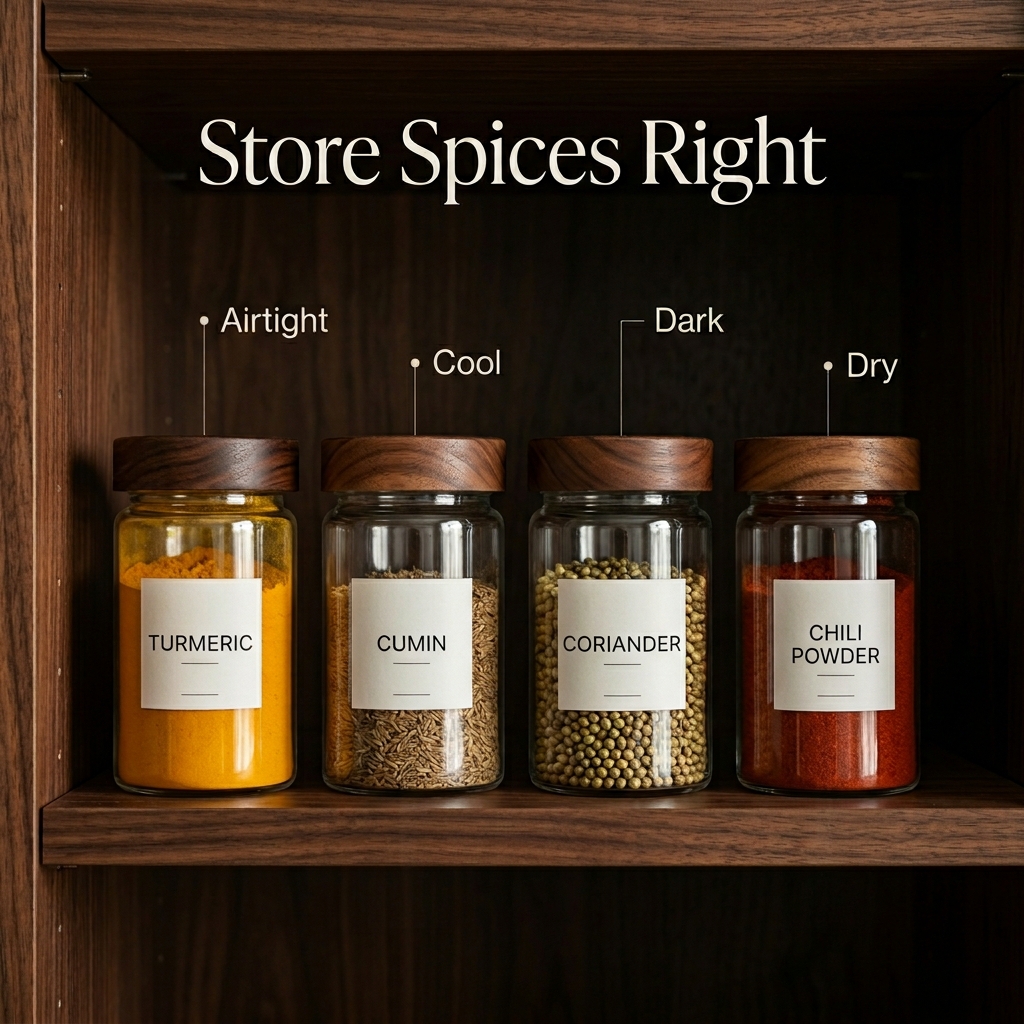
- Store in airtight glass jars, away from heat and light
What Are Indian Spices?
Indian spices come from different parts of plants — seeds like cumin and coriander, bark like cinnamon, dried roots like turmeric, flower buds like cloves, and resins like asafoetida. Each part of the plant produces different flavor compounds, which is why Indian cooking draws from such a wide variety.
What sets Indian spice use apart is technique. Most spices are not simply added to a dish — they are bloomed in hot oil first, a step called tadka or tempering. Those 15 to 20 seconds of heat transform raw, sharp flavors into something rounder and deeper. It is the foundation of most Indian dishes.
Whole Spices vs Ground Spices
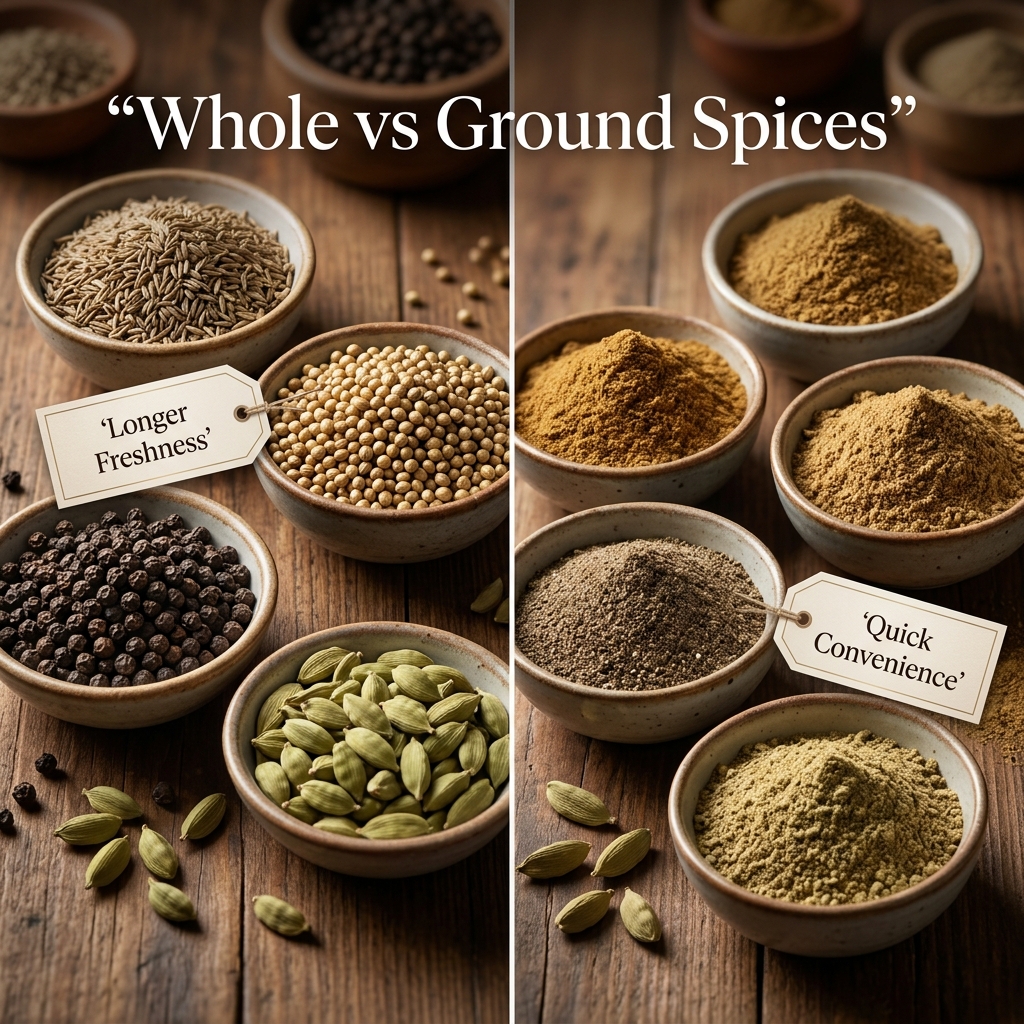
Whole spices hold their volatile oils until you crack or heat them — they stay potent for 3 to 4 years. Ground spices start losing their aroma within months. When possible, buy whole and grind small amounts as you cook. A basic coffee grinder kept only for spices makes a noticeable difference in flavor.
Common Indian Spices — Uses and Benefits
These are the spices you will encounter in most Indian cooking. Each entry covers what it tastes like, where it is used, and what it does for your health.
Turmeric (Haldi)
Flavor: Earthy, mildly bitter. Used in curries, dal, and rice — nearly every savory dish. Turmeric gives food its golden color and adds a faint bitterness that balances richer flavors. Its active compound, curcumin, is well studied for anti-inflammatory properties. It is best absorbed when cooked with a fat like ghee and paired with black pepper.
According to ICAR – Indian Institute of Spices Research, turmeric is one of India’s most studied spice crops for aroma, quality, and active compounds.
Cumin (Jeera)
Flavor: Warm, nutty, smoky. Used in tadka, dal, jeera rice, and raita. Cumin is almost always the first spice into hot oil. Whole seeds pop and turn smoky within seconds. Ground cumin is deeper and earthy. The two behave differently and are not interchangeable. Cumin stimulates digestive enzymes and helps ease bloating.
Coriander (Dhania)
Flavor: Citrusy, floral, mild. Used in curries, chutneys, and marinades. Coriander brightens dishes and softens the sharpness of other spices. Together with cumin in a 2:1 ratio, it forms the most common flavor base in Indian cooking. Freshly ground coriander has a noticeable orange-peel quality that disappears in older powder.
Red Chili (Lal Mirch)
Flavor: Hot, slightly fruity. Used in gravies, tadka, and marinades. Not all red chili powders are the same — Kashmiri chili is mild and used mainly for color, while Guntur is sharply hot. Capsaicin supports metabolism and the spice is rich in Vitamin C.
Black Pepper (Kali Mirch)
Flavor: Sharp, woody, pungent. Used in rasam, spice blends, and meat dishes. Black pepper predates chili in Indian cooking and remains the primary heat source in many South Indian preparations. Its active compound, piperine, boosts the absorption of turmeric's curcumin significantly — which is why the two are traditionally used together.
Mustard Seeds (Rai)
Flavor: Nutty when fried, sharp when raw. Used in South Indian tadka, pickles, and chutneys. Mustard seeds transform completely in hot oil — raw they are pungent, fried they become nutty and almost buttery. Cover the pan when they start popping, and have the next ingredient ready immediately.
Cardamom (Elaichi)
Flavor: Floral, citrusy, sweet-spicy. Used in chai, biryani, and sweets. Green cardamom is delicate and aromatic. Black cardamom is smokier and used in meat dishes. Chewing a pod after meals freshens breath and soothes digestion. It is one of the few spices equally at home in both desserts and savory dishes.
Cloves (Laung)
Flavor: Intense, warm, slightly numbing. Used in biryani, spice blends, and chai. Cloves are powerful — two or three whole cloves are enough for four servings. Their active compound eugenol has documented antibacterial properties and is the same compound used in dentistry for its mild numbing effect.
Asafoetida (Hing)
Flavor: Pungent raw, savory and onion-like when cooked. Used in dal, sabzi, and Jain cooking. Hing smells harsh straight from the container but transforms completely in hot oil into a complex, savory depth. A tiny pinch is all you need. It specifically reduces the gas-producing effect of lentils, which is why it appears in virtually every dal.
Ajwain (Carom Seeds)
Flavor: Thyme-like, sharp, slightly bitter. Used in parathas, pakoras, and fried foods. Ajwain is the most potent digestive spice in the Indian kitchen. It is added to fried and heavy foods not just for flavor but to make them easier on the stomach. Ajwain water — seeds boiled in a cup of water — is a traditional remedy for acidity and gas that genuinely works.
Which Indian Spices Help with Digestion?
Indian cooking has always been structured around digestion. Heavy lentil dishes include hing to reduce gas. Fried foods include ajwain to ease the stomach. Meals traditionally end with fennel seeds. This is not coincidence — it is functional food design that has been passed down over centuries.
The most effective digestive spices are ajwain, cumin, fennel, hing, and cardamom. Each one works differently — ajwain through thymol acting on intestinal spasms, cumin by stimulating digestive enzymes, fennel by relaxing smooth muscle in the gut, hing by countering legume fermentation, and cardamom by calming the stomach after a rich meal.
How to Store Spices Correctly
Most people lose more flavor from poor storage than from buying the wrong spice. Spices do not spoil dramatically — they quietly lose the volatile oils that carry their aroma. The result is food that looks right but tastes flat. The three enemies of spice quality are heat, light, and moisture.
 What to Do
Store spices in airtight glass jars with tight lids. Keep them in a cool, dark cabinet away from the stove. Label jars with the date of purchase. Buy whole spices when possible and grind small batches as needed.
What to Avoid
Plastic containers absorb smells and transfer them to spices over time. A spice rack directly above or beside the stove exposes spices to heat and steam with every meal. Countertop jars in sunlight degrade quickly. Buying very large packs means most of the spice will age badly before you finish it.
Quick freshness test: rub a pinch between your fingers and smell after a few seconds. A fresh spice announces itself immediately. If the aroma is faint or flat, it needs replacing.
Beginner's Indian Spice Pantry
These twelve spices cover the vast majority of everyday Indian cooking. Start here before buying anything else: turmeric powder, cumin seeds, cumin powder, coriander powder, red chili powder, black pepper (whole), black mustard seeds, garam masala blend, green cardamom pods, asafoetida, cinnamon sticks, and bay leaves.
With these twelve you can make dal tadka, jeera rice, aloo sabzi, and masala chai — four dishes that together cover the essential spice techniques used across Indian cooking.
Frequently Asked Questions
Which spice is used most in Indian cooking?
Turmeric appears in virtually every Indian savory dish. Cumin follows closely, forming the base of most dals, sabzis, and rice dishes.
Is it better to use whole spices or ground?
Whole spices retain flavor significantly longer. Ground spices are more convenient for everyday cooking. The best approach is to buy mostly whole and grind small amounts as needed.
How long do spices stay fresh?
Whole spices last 3 to 4 years when properly stored. Ground spices are best used within 1 to 2 years, though flavor fades much earlier. Blends like garam masala are best within 6 months of opening.
Why does home cooking smell different from restaurant food?
The biggest factor is usually the tadka — how confidently the first spices are bloomed in hot fat. A proper tadka with fresh spices in a genuinely hot pan produces a dramatically different result from adding spices directly to a sauce. Spice freshness is the second most common factor.
Final Thoughts
Once you know what each spice does and why, the cooking clicks into place. The flavors stop feeling like guesswork. Start with the twelve-spice checklist. Make dal tadka first. Pay attention to what happens when cumin hits hot oil. The rest follows naturally.
At Masala House, we believe understanding spices is just as important as choosing fresh, high-quality ingredients — because great cooking starts with both knowledge and purity.
Comments